
Pool Leak Detection in Mesa
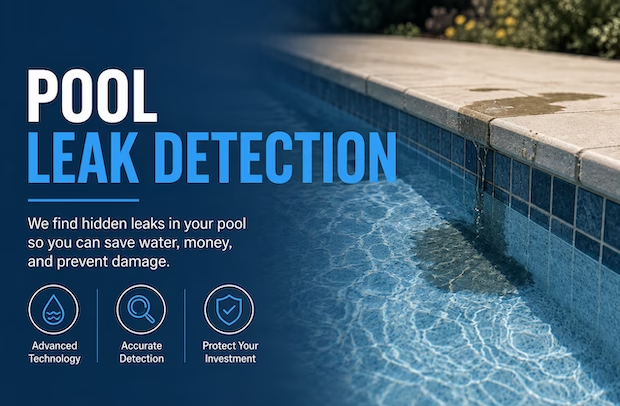
Dealing with a possible pool leak in Mesa? Mesa Leak Detection pinpoints pool leaks across Mesa before decks, plumbing lines, or pool shells are opened for repair. Desert evaporation can hide smaller losses, so we separate normal Arizona water loss from leaks in the shell, fittings, equipment, and buried circulation plumbing.
Losing more water than normal evaporation accounts for, needing to add water more than once a week, wet or soggy ground around the pool equipment or deck — these are the signs a pool leak is already running and costing you water and money every day.
(480) 631-3942
PRO Insight: Mesa pool owners expect water loss during 100-degree summer weather, which can let a small leak blend in with evaporation. When the water level keeps dropping beyond the normal heat-related loss, we test the pool system instead of using evaporation alone to judge whether there is a leak.
Serving Tempe, Chandler, Gilbert, Apache Junction, Queen Creek and surrounding Mesa areas.
Need Pool Leak Detection
Near Me?
Signs You May Have a Pool Leak
- Losing more than a quarter inch of water per day beyond normal evaporation
- Adding water more than once a week to maintain the pool level
- Wet or soggy ground around the pool equipment, deck, or yard
- Cracks in the pool shell, deck, or coping that have appeared or worsened
- Loose or lifting pool tiles from water movement behind the surface
- Air bubbles in the return lines when the pump is running
- Equipment running continuously to maintain water level or pressure
- Unusually high water bills without increased household usage
The Bucket Test —
Is It Evaporation or a Leak?
Before calling, confirm your pool is actually losing more water than normal evaporation accounts for. Fill a bucket with pool water and place it on a pool step so the water level inside the bucket matches the pool water level outside it. Mark both levels. After 24-48 hours compare the two. If the pool has dropped more than the bucket your pool has a leak. If they have dropped the same amount the loss is likely evaporation. In Mesa’s climate evaporation can account for a quarter inch or more per day — the bucket test removes that variable before detection begins.
Tip: Run the bucket test with the pool equipment both on and off for 24 hours each. If the pool loses more water with the equipment running the leak is likely in the plumbing, returns, or equipment pad. If it loses more with the equipment off the leak is more likely in the shell or fittings. This information helps us narrow the detection process before we arrive.
CALL NOW
(480) 631-3942
We Find & Fix Pool Leaks
in Mesa
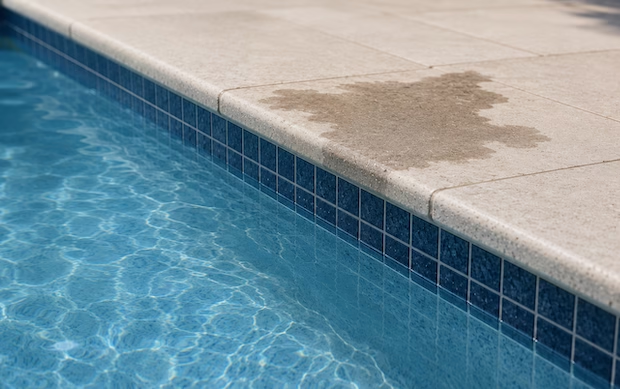
We compare water loss, inspect the equipment and pool structure, and isolate plumbing circuits where needed. Pressure testing, dye testing, acoustic equipment, and targeted inspection help separate shell leaks from failures in fittings or buried lines. Mesa’s heat, hard water, decking, and desert soil can complicate what appears to be a simple drop in water level. The goal is to identify the failed component before anyone cuts decking or excavates plumbing.
Pool Leak Detection Methods
We locate pool leaks using pressure testing of the plumbing lines, dye testing at fittings, lights, and returns to identify shell and fitting leaks, and electronic listening equipment for buried plumbing leaks. Most pool leaks fall into one of three categories — shell and structural leaks, plumbing and fitting leaks, or equipment pad leaks — and each requires a different detection approach. We work through each systematically until the source is confirmed.
Common Pool Leak Sources
in Mesa
- Shell cracks — structural cracks in plaster, gunite, or fiberglass from ground movement, age, or settling
- Fitting and light leaks — leaks at return fittings, skimmer connections, light niches, and main drains where fittings meet the shell
- Plumbing line leaks — leaks in buried supply and return lines between the pool and equipment pad
- Equipment pad leaks — leaks at the pump, filter, heater, or valve connections on the equipment pad
- Skimmer leaks — separation between the skimmer body and the pool shell, common in older pools
Pool Leak Repair
in Mesa
Once the leak source is confirmed we walk you through the repair options for your specific situation:
- Structural crack repair — hydraulic cement, epoxy injection, or replastering depending on the crack type and location
- Fitting and light niche repair — resetting, resealing, or replacing fittings, gaskets, and light housings
- Plumbing line repair — targeted excavation and repair of buried supply or return lines at the confirmed leak location
- Equipment pad repair — repair or replacement of leaking pump seals, valves, or connections at the equipment pad
- Skimmer repair — resealing or replacing the skimmer body connection to the pool shell
The pool must be full, clean, and clear at the time of the detection visit for accurate results.
Pool Leak Detection and
Repair Cost in Mesa
- Standard pool detection: $300-$600
- Complex pool systems: $500-$1,000
- Shell crack repair: $500-$2,500
- Fitting and light niche repair: $250-$750 per fitting
- Buried plumbing line repair: $750-$3,500
See our full leak detection cost guide for Mesa for complete pricing information.
(480) 631-3942
Leak Detection Services
in Mesa
_______________________________________
Pool Leak in Mesa?
We Can Find It.

Mesa Leak Detection specializes in finding water loss in Mesa pools without guessing which part of the system has failed. We test the shell, fittings, equipment, and circulation lines so the repair is aimed at a confirmed leak rather than normal desert evaporation.
Pool leaks in Mesa are often misdiagnosed as evaporation — especially in the summer when water loss is expected. But a pool losing a quarter inch or more per day beyond what the bucket test accounts for is almost certainly leaking somewhere in the shell, plumbing, or equipment. Mesa Leak Detection identifies the source accurately before any repair work begins.
Local Knowledge — Summer evaporation in Mesa can make a leaking pool look normal at first, especially during stretches of triple-digit heat. A bucket test and system isolation help separate weather-related water loss from a plumbing, fitting, or shell leak.
Systematic Detection — We work through shell, fitting, plumbing, and equipment leak sources methodically until the source is confirmed. No guessing, no unnecessary repairs.
Repair Options Explained — Crack repair, fitting replacement, plumbing repair, or equipment pad work — we walk you through every option with clear guidance on what makes sense for your pool and budget.
Clear Communication — You receive a full explanation of what was found and where before any repair decisions are made. No pressure, no surprises.
Fast Response — Pool leak appointments are available throughout Mesa, with same-day service offered when the schedule permits. Call (480) 631-3942 when water loss continues beyond normal evaporation or the pool requires frequent refilling.
How Do Our Pool Leak
Detection Services Work?
1. Run the Bucket Test First: Before we arrive confirm your pool is losing more water than evaporation accounts for using the bucket test described above. This saves time and confirms detection is the right next step.
2. Call and Describe What You Are Seeing: Tell us your symptoms — how much water you are losing, whether it is worse with equipment on or off, any visible cracks or wet areas around the pool. We prepare for your specific pool type before we arrive.
3. Systematic Detection: A technician works through shell, fitting, plumbing, and equipment leak sources using pressure testing, dye testing, and electronic listening equipment until the leak source is confirmed.
4. Source Identified and Explained: We tell you exactly what was found and where before any repair decisions are made.
5. Repair Completed: Once the source is confirmed we complete the appropriate repair — crack repair, fitting replacement, plumbing repair, or equipment pad work — and test the system to confirm the leak is resolved.
Note: The pool must be full, clean, and clear at the time of the detection visit for accurate results.
(480) 631-3942
_______________________________________
Serving Mesa, Arizona
and Nearby
Mesa Leak Detection provides pool leak detection and repair throughout Mesa and Maricopa, including Tempe, Chandler, Gilbert, Apache Junction, Queen Creek and surrounding communities.
Service Area: Mesa and Maricopa, including 85201, 85202, 85203, 85204, 85205, 85206, 85207, 85208, 85209, 85210, 85212, 85213, 85215 and nearby.
(480) 631-3942
_______________________________________
Pool Leak Detection FAQ
in Mesa
Questions about pool leaks in Mesa? Call Mesa Leak Detection anytime at (480) 631-3942 or review common questions below:
HOW DO I KNOW IF MY POOL HAS A LEAK OR IS JUST EVAPORATING?
WHERE DO POOL LEAKS USUALLY COME FROM?
DO I NEED TO DO ANYTHING TO PREPARE THE POOL BEFORE THE VISIT?
WHAT CAUSES POOL LEAKS IN Mesa?
WHAT ARE THE REPAIR OPTIONS FOR A POOL LEAK?
HOW MUCH DOES POOL LEAK DETECTION COST IN Mesa?
HOW LONG DOES POOL LEAK DETECTION TAKE?
_______________________________________
(480) 631-3942
Home Services Campaign Disclaimer: This website is a free service to assist homeowners in connecting with local service providers. All contractors/providers are independent and this site does not warrant or guarantee any work performed. It is the responsibility of the homeowner to verify that the hired contractor furnishes the necessary license and insurance required for the work being performed. All persons depicted in a photo or video are actors or models and not contractors on this site.
Local Leak Detection ©2026